New Construction ★ Fort Sill Area
New Construction Upgrades in Elgin, Oklahoma: What's Worth the Money
Elgin's new-construction market lists from the mid-$300s to around $500K, and the base price of a new home is only the start of the conversation. The design center, the options list, and the upgrade allowances can quietly add tens of thousands of dollars to a build before the contract is signed, and buyers ask the same question in one form or another: which upgrades are actually worth the money? The honest answer, whether you are building with Harland Custom Homes, Cutler Signature Homes, or one of the smaller Elgin builders, is to spend builder money on what you cannot change later, skip what you can swap out after closing, and set your upgrade budget before you ever walk into the design center. Here is how to make upgrade money work on an Elgin new build.
★ The short answer: pay the builder for what you can't change later
The rule that saves buyers the most money is simple: buy upgrades from the builder that are impossible or very expensive to change after the house is finished, and hold back on the finishes you could replace in a few years without tearing walls apart.
Worth paying the builder for: structural changes, ceiling height, garage size, extra electrical outlets and circuits, wiring for internet and smart-home gear, plumbing rough-ins, upgraded insulation and energy packages, and a safe room poured into the design. Almost all of that work happens behind the drywall or under the slab, which means it costs a fraction of what it would cost to add later, and in many cases it cannot be added later at all.
The finishes the design center sells hardest, light fixtures, appliances, countertops, flooring, and backsplash tile, are the ones you can almost always get for less after closing. That does not mean none of them are worth taking from the builder. It means each one deserves its own math.
The Buying Process guide explains how upgrades and allowances fit into the builder contract, and the article on common new-construction mistakes covers the classic error of assuming the base price includes the upgrades you want.
★ Upgrades that are worth paying the builder for
The upgrades with the best return are the ones you will live with forever. Nine-foot ceilings instead of eight, a true three-car garage that fits a crew-cab truck, an extended covered patio, an extra bedroom or a fourth bathroom laid out at the design stage, all of these are structural decisions. Once the slab is poured and the walls are framed, changing them means demolition, not an upgrade.
Electrical is the category buyers underestimate the most. Add every outlet you think you need, and then a few more: exterior outlets for holiday lights and mowing equipment, outlets in the garage, a circuit for a workshop, and low-voltage wiring for internet, security cameras, and television drops. Rough-in pricing on these items is small while the walls are open, and the cost to retrofit a single outlet after drywall is many times the design-center price.
Ask about the builder's energy package: more attic insulation, a higher-efficiency air conditioner, a radiant barrier in the attic, and low-E windows. Southwest Oklahoma summers are long and hot, and these are the upgrades that pay you back every month in the power bill instead of only at resale.
The New Construction Communities page keeps the current list of active Elgin builders and communities, and the builders article goes deeper on who is building where, so you can compare what each builder includes in the base price.
★ Storm shelters: the upgrade Oklahoma buyers ask about first
If you are moving to Fort Sill from a part of the country that does not do tornado season, this is usually the first upgrade question. A certified storm shelter or safe room is not a standard inclusion in Southwest Oklahoma. It is an option, and for many military families it is the option that sells the house.
The version that matters is a safe room built to FEMA's design guidance and ICC 500 standards, impact-tested at Texas Tech, installed under the garage, in a master closet, or in a hallway. The Oklahoma Department of Emergency Management's SoonerSafe program offers rebates for eligible FEMA-compliant installations, and Oklahoma exempts the appraised value of a certified safe room from property tax assessment, so there is a small tax incentive built in.
The value math is modest but real. Published research on shelters found that homes with them sell for about 3.5 percent more on average, and Oklahoma State University Extension notes appraisals typically add roughly $1,000 to $4,000 depending on the shelter, on top of the peace of mind. The bottom line for most Southwest Oklahoma buyers: if the budget can carry the option, it is one of the few upgrades that feels like insurance instead of decoration.
Oklahoma State University Extension covers the cost and value side of shelters in this shelter-shopping article, and the SoonerSafe program FAQ has the rebate details.
★ Where the design-center markup hides
The design center is where builders make money on upgrades, and that is not a criticism, it is how the business works. Published industry guidance from 2025 and 2026 puts design-center markups on many cosmetic items at roughly 30 to 50 percent over retail, and on some items, countertops and window treatments are the usual suspects, the gap can be wider.
Light fixtures are the classic example. Builders routinely price them well above retail, and many buyers replace a large share of them within the first year anyway. The same story plays out with premium appliance packages, where the same refrigerator is usually cheaper through an appliance dealer after closing. Quartz countertops and upgraded flooring are the two biggest-ticket design-center items, and independent quotes for both routinely come in below the builder's option price.
None of this means the builder is taking advantage of you. You are paying for convenience, for the cost being rolled into your mortgage, and for the work being done before you move in. The question is whether the convenience is worth the markup on that specific item, and the answer is very different for a switch plate than it is for an entire engineered wood floor.
The closing costs article explains how financed upgrades show up in your loan and your payment, so you can compare the out-of-pocket version of an upgrade against the financed version.
★ What Elgin builders actually include in the base price
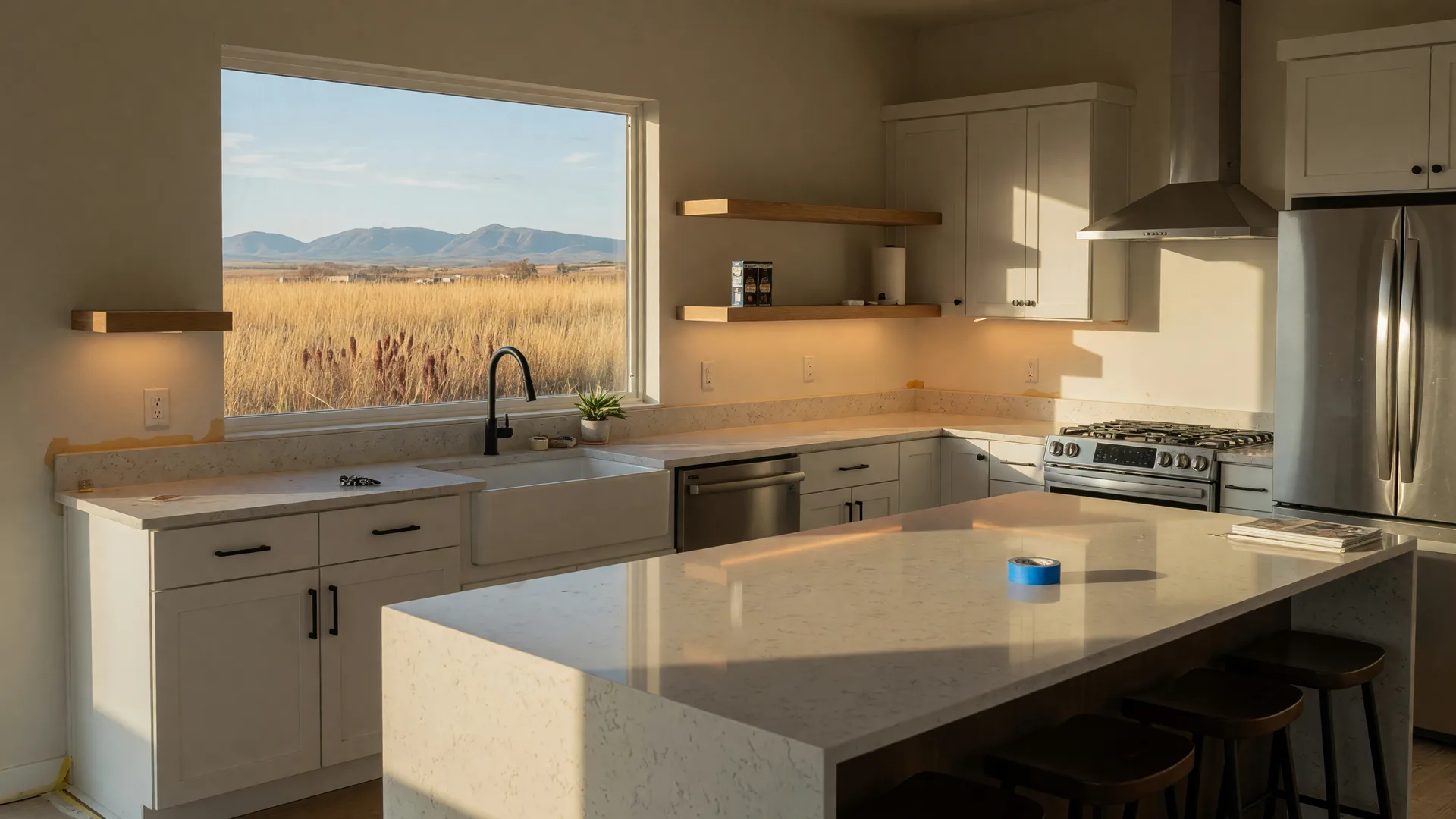
Elgin's builders do not all start from the same base, and that is the most important thing to know before you compare options. Harland Custom Homes, a family-owned custom builder based in Elgin with roots back to 1979, builds to the buyer's specs. They run their own in-house design center with decorators, and their spec and model homes show brick-veneer exteriors, oversized three-car garages, large walk-in closets with built-in cabinetry, master suites with tiled showers and dual sinks, quartz countertops, and farm sinks.
Cutler Signature Homes is the other name buyers and local agents know, an Elgin-based new-home builder working across Elgin, Lawton, Fletcher, and Sterling. Between them and the smaller custom builders, the Elgin market is compact, roughly two to three active builders, which means price comparison is a direct conversation rather than a spreadsheet of twenty communities.
Because builders differ, the only honest comparison is the written standard-features list for the exact plan and community you are considering. Two builders can quote the same base price while one includes granite counters, engineered floors, and a covered patio and the other includes laminate, carpet, and an open pad. Compare finished specs, not brochure prices.
The New Construction Communities page keeps the current builder list, the cost article explains what each Elgin price point buys, and the Harland Custom Homes site and the Cutler Signature Homes site are both worth a look before you tour.
★ How upgrade pricing actually works: base price, options, allowances, and change orders
Every builder's quote starts the same way: a base price that includes the standard plan on the standard lot, plus the lot premium, plus whatever you pick in options and allowances. Allowances are the trap most first-time builders miss. The builder gives you a dollar allowance for flooring, cabinets, or countertops, and the allowance is a credit, not a finished product. The moment your selections exceed the allowance, usually the moment you fall in love with the nicer tile, the difference becomes an upgrade priced by the design center.
Change orders are the second trap. Anything you change after the contract is signed, or after the relevant phase of construction starts, carries extra cost and paperwork, and some builders charge a change-order fee on top. The family that makes its decisions at the design center and makes them once pays materially less than the family that keeps tweaking through framing.
The Buying Process guide walks through allowances, change-order rules, and the contract language to read before you sign, and the questions-to-ask checklist has the exact questions to put in writing.
★ Upgrades and your VA loan: the appraisal watches the price
If you are buying with a VA loan, upgrade choices have a second consequence: the appraisal. On new construction the VA appraisal is typically done as-completed, meaning the appraiser reviews the plans and issues a Notice of Value before the build finishes, and that value has to support the final contract price, options included.
The practical risk is running the finished price past what the home appraises for. A $390,000 base with $50,000 in upgrades still has to appraise near the finished number. When the appraisal comes in under the contract price, the buyer covers the difference out of pocket or negotiates with the builder. The upgrades are not the problem, the mismatch is, so run the numbers with your lender before you fall in love with the option list.
The article on VA loans and Elgin new construction covers the as-completed appraisal in detail, the VA Loan & BAH guide has the 2026 payment math, and the official program rules are at va.gov.
★ Elgin-specific upgrades: where the local money works
A few upgrades pay off differently in Elgin than they would in a metro market. The first is the garage. Elgin's half-acre to one-acre homesites and the rural Southwest Oklahoma lifestyle mean trucks, trailers, and toys, and the oversized-bay three-car garage, or a detached shop on the bigger lots, is the upgrade families actually use. Ask the builder what the option costs while the plan is still on paper; a shop added later is a separate construction project.
The second is outdoor living. The warm season runs long, and a covered patio, an extended porch, or outdoor kitchen space extends the part of the house you live in for months out of the year. Third, do not ignore the view. If the lot backs to open pasture or faces the Wichita Mountains, orient the big windows toward it and spend upgrade money there; it is the cheapest way to make a home feel like Elgin.
Fourth is the practical stuff the floor plan never shows: where the driveway approach lands, whether the lot needs extra grading or a culvert, and the difference between city water and sewer versus rural water with a septic system. Those are line items on the builder's quote, not design-center options, but they move the final number just as much.
The article on Elgin lots covers the utility picture and what half-acre to one-acre homesites really fit, and the Elgin Living guide has the local lifestyle details that shape which upgrades you will actually use.
★ The budget framework that keeps you out of trouble
Set the upgrade budget before the design center, not in it. The common practical rule is to cap upgrades around 20 percent of the base price, with many buyers landing in the 10 to 20 percent range once the selections are done. On an Elgin build in the mid-$300s, 10 percent is roughly $35,000 and 20 percent is roughly double that. Both numbers sound big, and both disappear fast across cabinetry, flooring, counters, appliances, and fixtures.
Spend the budget on the rooms you live in daily: the kitchen, the primary bath, and the garage. The rooms guests see once a year matter less than the rooms your family uses every day. And remember that the model home is the most expensive version of the house; everything in it is the upgraded version, and nobody needs the whole model.
Finally, keep money out of the design center on purpose. A new build on a raw Elgin lot needs fencing, grass, window coverings, furniture, and usually a few appliances, and none of those are rolled into the mortgage. Buyers who spend the full upgrade budget at the design center and nothing on the yard end up with a beautiful house on a bare dirt lot.
The closing costs article covers the prepaids and line items that go with closing on a new build, and the new construction vs resale comparison is worth reading if your timeline lets you weigh a finished resale against a build.
★ Which new-construction upgrades add the most value?
Structure, garage space, ceiling height, energy efficiency, and a certified safe room are the upgrades with staying power, because they are expensive or impossible to change later and they still matter at resale. Kitchen and bath upgrades hold value well, which is why industry cost-vs-value reports keep kitchen and bathroom work near the top of the list, and why local agents tell buyers to spend upgrade money there first. Cosmetic finishes like fixtures and window treatments rarely pay for themselves.
★ How much should I budget for upgrades on a new build?
The common practical rule is 10 to 20 percent of the base price, with 20 percent as the ceiling most local agents recommend. On an Elgin new build that is a meaningful number, so set it before you enter the design center and let the budget make the decisions, not the samples.
★ Do I have to buy upgrades from the builder's design center?
For the structural, electrical, and plumbing items, yes, because they are part of the construction contract and the builder's warranty. For finishes like countertops, appliances, flooring, and fixtures, some builders let you bring in your own contractors, usually after closing, but check the contract first because some require their approved vendors and doing finish work before closing can complicate the warranty. When you can legally defer a finish, the independent quote is often the cheaper one.
★ Can I roll upgrades into my mortgage?
Yes, when the upgrades are part of the builder's contract price, the finished price is what you finance. On a VA loan the as-completed appraisal has to support that finished price, so the loan amount and the upgrades are one conversation, not two. Ask your lender to run the payment on the finished number before you commit to the option list.
★ Do upgrades increase my property taxes in Oklahoma?
On new construction, yes, in a broad sense. The county assessor puts the finished home on the tax roll at market value for the second year of ownership, and the finished value includes what you paid for options and upgrades. That is the well-known first-year tax jump on new builds. Oklahoma does exempt the added value of a FEMA-certified storm shelter from property tax assessment, which is one small reason the safe room option pays twice.
★ Is a storm shelter worth it on a new build near Fort Sill?
For most families moving to Southwest Oklahoma, yes, if the budget allows. Certified safe rooms are not a standard inclusion, they are an option, and parents who have been through a tornado warning tend to put them at the top of the list. The published value data is modest, around a 3.5 percent average price premium in one well-known study, but the peace of mind does not show up in an appraisal.
★ The bottom line
The upgrade question is really a budget question wearing a design-center disguise. Pay the builder for the structure, the wiring, the insulation, the safe room, and the garage, the things you cannot change later. Be skeptical of the markup on fixtures, appliances, and finishes. And set the 10 to 20 percent budget before you sit down at the sample table.
Elgin's market is small enough that the decisions are personal. A local agent who has watched these builders price options, allowances, and change orders can tell you which upgrades hold value in Elgin and which ones buyers never ask about at resale.
For a straight answer on what the Elgin builders actually include, book a 30-minute consultation or call (580) 647-0915. The call is free, and the honest answer is yours either way.
★ A note on numbers and sources
The upgrade costs and design-center markups above reflect commonly published ranges from 2025 and 2026 industry guidance, not a specific Elgin builder's price list. Standard features, option pricing, allowances, and change-order rules vary by builder and plan, so the written standard-features list in each contract is the only number that matters. Safe room value and tax information draws on Oklahoma State University Extension and the Oklahoma Department of Emergency Management's SoonerSafe program. VA appraisal rules reflect program guidance at va.gov as of October 2026 and can change. Confirm current pricing and inclusions with the builder, your lender, and a local REALTOR® before you make decisions.
Questions about this topic?
Talk it through with a local REALTOR®.
Travis Wright is a Southwest Oklahoma native, a Fort Sill relocation specialist, and a new-construction agent with eXp Realty. A 30-minute consultation is free, and there is no pressure to decide anything on the call.